
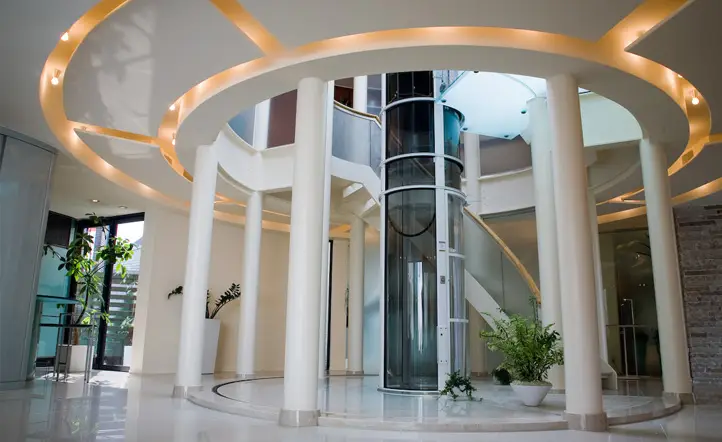
Elevators are becoming increasingly important in modern residential and commercial buildings. Whether you are considering installing a home elevator, managing an office lift, or looking for reliable maintenance for an existing system, it is normal to have questions before making a decision.
From elevator cost and installation to maintenance, safety, power outages, and repairs, understanding how elevator systems work can help property owners make better decisions.
Below are answers to some of the most common questions customers ask about elevators and lift services.
What Is a Home Elevator?
A home elevator is a compact vertical transportation system designed to move people between floors within a private residence.
Unlike traditional commercial elevators, many modern home elevators are designed specifically for residential environments. Depending on the model, they may require less structural modification and can be suitable for both new and existing homes.
Home elevators can improve accessibility, convenience, and movement between floors, particularly for:
- Elderly residents
- People with mobility challenges
- Wheelchair users
- Families with young children
- Homeowners carrying heavy items
How Much Does a Home Elevator Cost?
There is no single price for every home elevator.
The final cost can depend on factors such as:
- Number of floors
- Elevator model
- Capacity
- Installation requirements
- Location
- Customisation
- Door configuration
- Finishing options
- Site conditions
For this reason, requesting a professional assessment and quotation is more useful than relying on a general price estimate.
How Long Does Elevator Installation Take?
Installation time depends on the elevator type, building structure, number of floors, site preparation, and model selected.
Some modern residential elevator systems are designed for relatively quick installation, while conventional systems may require more extensive construction work.
A professional site assessment allows the installation team to determine the specific requirements before providing an estimated timeline.
Does a Home Elevator Require a Large Space?
Not necessarily.
One of the advantages of modern home elevators is that some models are designed for relatively compact spaces.
Depending on the elevator, installation may be possible in areas such as:
- A corner of a room
- Beside a staircase
- Through an existing floor opening
- Within a dedicated elevator space
The available space should always be assessed by an elevator professional before selecting a model.
Can an Elevator Be Installed in an Existing House?
Yes. A home elevator does not necessarily have to be planned during the original construction of a house.
Depending on the building and elevator technology, a lift may be installed in an existing property.
The installation team will need to assess the structure, available space, floor configuration, access points, and other site conditions before recommending a suitable solution.
Do Home Elevators Work During Power Cuts?
Some elevator systems include emergency features that allow passengers to exit safely during a power interruption.
Depending on the model, this can include automatic descent or emergency lowering systems that bring the elevator to a suitable landing during a power failure.
The exact behaviour depends on the elevator technology and installed safety features.
Homeowners should ask about power-outage operation before purchasing an elevator.
Are Home Elevators Safe for Elderly Users?
Yes. Home elevators can provide an important accessibility solution for elderly users.
Instead of repeatedly climbing stairs, an elderly family member can use the elevator to move between floors.
Useful accessibility and safety features may include:
- Easy-to-use controls
- Emergency alarms
- Automatic door systems
- Safety sensors
- Emergency lighting
- Handrails
- Emergency descent systems
The appropriate features depend on the user's needs and the selected elevator model.
How Often Should an Elevator Be Maintained?
Elevators should receive regular professional maintenance according to the equipment requirements, manufacturer's recommendations, usage, and operating environment.
A high-traffic commercial elevator may require a different maintenance schedule from a private residential elevator.
Preventive maintenance can include inspection, testing, cleaning, lubrication, adjustments, and checking safety-related components.
Why Is Elevator Maintenance Important?
Regular maintenance helps identify developing problems before they become major failures.
Without appropriate maintenance, property owners may experience:
- Unexpected breakdowns
- Higher repair costs
- Longer downtime
- Poor ride quality
- Premature component wear
- Safety concerns
Preventive maintenance is therefore an important part of protecting the elevator investment.
Can PE Lifts Service Elevators Installed by Other Companies?
Yes. Elevator maintenance does not necessarily have to be provided by the original installer.
PE Lifts' maintenance services can support eligible elevator systems from different brands and manufacturers, subject to technical assessment.
This can be useful for property owners who have inherited an existing elevator, purchased a building with an existing lift, or want to change maintenance providers.
What Types of Elevators Can PE Lifts Service?
The appropriate service depends on the equipment and the technician's technical expertise.
Elevator technologies may include:
- Traction elevators
- Hydraulic elevators
- Machine-room-less elevators
- Vacuum or pneumatic elevators
- Residential elevators
- Commercial elevators
A professional assessment can determine the elevator's type, condition, and maintenance requirements.
What Happens During an Elevator Maintenance Visit?
A maintenance visit can involve several checks rather than simply looking for obvious faults.
Depending on the equipment, technicians may inspect:
- Elevator doors
- Braking systems
- Control systems
- Safety switches
- Electrical components
- Drive systems
- Floor levelling
- Emergency systems
- Ride performance
The technician may also identify components that require adjustment, repair, replacement, or further investigation.
What Are the Signs That an Elevator Needs Repair?
An elevator should be inspected if you notice changes in its normal operation.
Potential warning signs include:
- Unusual sounds
- Excessive vibration
- Doors opening or closing slowly
- Doors failing to close properly
- Rough stopping
- Inaccurate floor levelling
- Repeated shutdowns
- Delayed responses
- Unusual smells
- Frequent error messages
Do not ignore recurring problems simply because the elevator continues to operate.
Can Regular Maintenance Reduce Elevator Repair Costs?
Preventive maintenance can help reduce avoidable breakdowns by identifying developing problems earlier.
For example, identifying a worn component during a scheduled inspection may allow the building owner to plan a replacement before the component fails.
An unexpected breakdown, on the other hand, can result in:
Emergency repair + replacement parts + technician response + downtime + disruption
Regular maintenance provides a more predictable way to manage elevator-related costs.
What Is an Annual Maintenance Contract?
An Annual Maintenance Contract (AMC) is an agreement between a property owner or facility manager and an elevator maintenance provider for scheduled maintenance and technical support over a defined period.
Depending on the agreement, an AMC may include:
- Preventive maintenance
- Safety inspections
- Routine servicing
- Performance checks
- Corrective maintenance
- Technical support
- Maintenance reports
An AMC can make it easier for building owners to plan maintenance instead of waiting for unexpected breakdowns.
Can an Old Elevator Be Modernised?
In some cases, yes.
Elevator modernisation involves upgrading selected components or systems to improve performance, reliability, safety, or functionality.
Depending on the condition of the equipment, modernisation may involve:
- Controls
- Doors
- Drive systems
- Lighting
- Operating panels
- Safety systems
A technical assessment is necessary to determine whether modernisation or complete replacement is the better option.
How Do I Know Which Elevator Is Right for My Building?
There is no single elevator that is ideal for every property.
The right choice depends on:
- Building type
- Number of floors
- Available space
- Passenger capacity
- Frequency of use
- Accessibility requirements
- Budget
- Installation conditions
- Desired features
A professional elevator company can assess the property and recommend an appropriate solution.
Can Elevators Be Customised?
Yes. Depending on the model, homeowners and developers may be able to customise elements such as:
- Cabin finishes
- Lighting
- Doors
- Controls
- Colours
- Interior materials
- Accessibility features
Customisation options vary by elevator model.
How Do I Get an Elevator Assessment?
The best starting point is to contact a professional elevator company and request a site assessment.
During an assessment, the team can evaluate:
- Available space
- Number of floors
- Building layout
- Structural requirements
- Intended usage
- Elevator capacity
- Accessibility requirements
The information gathered can then be used to recommend the appropriate elevator or maintenance solution.
Still Have Questions About Your Elevator?
Every building is different, so general information cannot replace a professional assessment.
Whether you are planning a new home elevator, replacing an existing lift, upgrading an old system, or arranging regular maintenance, getting expert advice early can help you avoid unnecessary costs and choose a solution that fits your property.
Talk to PE Lifts About Your Elevator Needs
Have more questions about elevator installation, maintenance, repair, modernisation, or choosing the right lift?
Contact PE Lifts today for a professional consultation and site assessment.
Our elevator specialists can help you understand your options, assess your building requirements, and recommend a practical solution for your property.
Don't guess when it comes to your elevator. Talk to PE Lifts today and take the next step towards safer, more reliable vertical transportation.
SEO Details
SEO Title: Frequently Asked Questions About Elevators | PE Lifts