
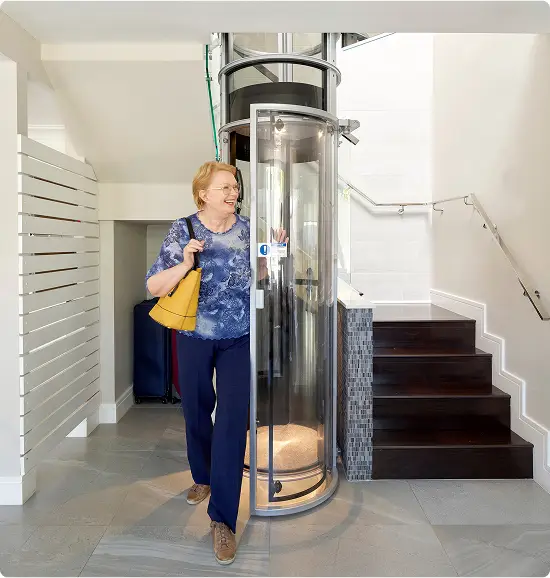
A home elevator makes movement between floors easier, but every homeowner should understand what to do if an unexpected situation occurs while someone is inside the lift.
One important safety feature to understand is emergency descent. Depending on the elevator model, an automatic rescue or descent system may help move the cabin to a designated landing when normal operation is interrupted.
However, homeowners should not assume that every pneumatic lift has the same emergency system or operates in exactly the same way.
For families using a pneumatic home elevator, understanding the emergency procedure is important. Adults, children and regular household users should know how to respond, how to use the alarm and when to contact the service team.
This guide explains what pneumatic lift emergency descent means, how automatic descent may work and what families should practise after installation.
What Is Pneumatic Lift Emergency Descent?
Pneumatic lift emergency descent refers to a safety function that allows the elevator cabin to move towards a designated landing during certain emergency conditions.
In a pneumatic elevator, cabin movement is controlled through a pressure difference within the lift system.
Depending on the model and its safety design, an emergency descent function may use a controlled release of pressure to help the cabin descend.
The exact operation depends on the manufacturer's engineering and safety arrangements.
It is important to distinguish between normal operation and emergency descent. Emergency descent is not an alternative way to operate the elevator. It is a specific safety function intended for defined situations.
Homeowners should ask the supplier to demonstrate the procedure for their particular model during commissioning.
What Is an Automatic Rescue Device?
An Automatic Rescue Device, commonly called an ARD, is a safety system designed to help an elevator respond to certain operating interruptions.
In conventional elevator systems, an ARD may use stored electrical energy to move the cabin to a suitable landing and allow passengers to exit.
However, the term ARD should not automatically be applied to every pneumatic elevator.
Some pneumatic lift models may use a different automatic descent arrangement rather than a conventional battery-powered rescue device.
Before installation, ask the supplier:
- Does this model have automatic emergency descent?
- Is the system automatic or does it require manual action?
- What conditions activate it?
- Does it operate during a power interruption?
- Which landing does the cabin move towards?
- Does it require a battery or another power source?
- What should passengers do after the cabin reaches the landing?
The answers should be specific to the selected model.
What Happens During a Power-Failure Descent?
A power interruption can affect normal elevator operation. The emergency response depends on the lift's design and the safety features installed.
Where the selected pneumatic elevator has an automatic descent function, the system may be designed to move the cabin towards a designated landing under specified conditions.
Homeowners should understand three important points.
First, automatic descent is model-specific. Not every pneumatic elevator uses the same mechanism or has identical operating conditions.
Second, passengers should remain calm. They should avoid trying to force the doors open or interfere with the elevator controls.
Third, the procedure must be demonstrated. The supplier should explain what passengers can expect and what actions, if any, they need to take.
Never assume that a power interruption will always trigger the same response across different elevator models.
What Should Passengers Do If the Lift Stops?
If someone becomes stuck inside a pneumatic home elevator, the most important thing is to remain calm and follow the manufacturer's emergency instructions.
Use this simple response guide:
1. Stay Calm
Passengers should avoid panic and unnecessary movement.
Reassure children or anyone who may feel uncomfortable. Explain that they should wait for assistance rather than trying to escape on their own.
2. Use the Alarm or Emergency Communication System
If the elevator has an alarm or emergency communication feature, use it according to the instructions provided during commissioning.
The alarm helps alert people outside that assistance is needed.
If the system includes a telephone or other communication device, follow the supplier's instructions for contacting assistance.
3. Do Not Force the Doors Open
Passengers should not try to pull open doors, climb out or force their way through an opening.
The cabin may not be level with the landing. Attempting to exit without proper assistance can create additional danger.
4. Wait for the Approved Rescue Procedure
Follow the manufacturer's emergency instructions and contact the authorised service provider.
Do not attempt to operate technical controls or manually release components unless the manufacturer has specifically trained and authorised the person to do so.
5. Confirm the Lift Is Safe Before Reuse
After an emergency event, the elevator should be checked according to the manufacturer's procedure.
Do not return it to normal use simply because the cabin has moved or the power supply has returned.
What Should Homeowners Practise After Installation?
A safety briefing should not end when the installation team leaves.
Every household member who may use the elevator should understand the basic emergency response.
A simple family safety drill can cover the following:
| Safety activity | What the household should learn |
|---|---|
| Recognise the alarm | Know where the alarm control is located |
| Understand emergency descent | Know what the selected model does during an emergency |
| Contact assistance | Know whom to call when the lift stops |
| Avoid forced escape | Understand why doors should not be forced open |
| Protect children | Teach children to remain calm and seek adult assistance |
| Report unusual behaviour | Know how to report unexpected sounds, movement or faults |
| Follow handover instructions | Keep the manufacturer's emergency guidance accessible |
The goal is not to encourage families to practise dangerous rescue actions. It is to make sure everyone knows how to respond safely.
Create a Simple Household Safety Briefing
A short household briefing can help prevent confusion during an emergency.
The homeowner should arrange a demonstration with the elevator supplier and share the key instructions with regular users.
The briefing should answer these questions:
Who should passengers contact?
Keep the service provider's contact details somewhere accessible to household members.
Where is the alarm control?
Show users how to identify and operate the alarm or emergency communication feature.
What happens if automatic descent activates?
Explain the expected movement and the correct passenger response for the installed model.
What should children do?
Children should know not to force doors, interfere with controls or attempt to leave the cabin without assistance.
Who is allowed to perform a rescue?
Make it clear that technical rescue procedures should only be carried out by people trained and authorised under the manufacturer's instructions.
Keep the briefing simple enough for everyone in the household to understand.
What Should Be Included in the Commissioning Safety Briefing?
Commissioning is an important opportunity to learn how the elevator operates and how to respond to an emergency.
Before accepting the completed installation, request a practical safety briefing from the supplier.
Ask the technical team to demonstrate or explain:
- Normal elevator operation.
- Emergency descent or rescue function.
- Conditions that activate automatic descent.
- Alarm and emergency communication controls.
- What passengers should do if the cabin stops.
- What happens if the automatic system does not operate as expected.
- Who to contact for technical assistance.
- What actions homeowners must never attempt.
- How to report a fault after an emergency event.
Request written emergency instructions that match the installed model.
Do not rely only on a general explanation or instructions intended for another elevator system.
How Often Should a Family Review Its Elevator Safety Procedure?
A family should review the emergency instructions whenever a new person begins using the elevator regularly.
It is also useful to review the procedure:
- After a change in household members.
- When children become regular users.
- After maintenance or significant servicing.
- When the supplier updates the operating instructions.
- If the household notices unusual elevator behaviour.
The household should not deliberately interrupt power or trigger emergency descent to test the system unless the manufacturer has approved and supervised the test.
Any technical testing should follow the supplier's official procedure.
Pneumatic Lift Emergency Descent Checklist
Use this checklist after installation to confirm that the household understands the safety arrangements.
- Confirm whether the selected model has automatic emergency descent.
- Understand what conditions activate the system.
- Know whether the procedure is automatic or requires user action.
- Identify the alarm or emergency communication control.
- Save the authorised service provider's contact details.
- Explain the procedure to regular household users.
- Teach children not to force the doors open.
- Keep the model-specific emergency instructions accessible.
- Request a commissioning safety briefing.
- Confirm the approved procedure for checking the lift after an emergency.
Why Should You Request a Safety Briefing from PE Lifts?
A home elevator should come with more than an installation demonstration. Homeowners should also understand the safety features and emergency procedures of the selected model.
PE Lifts provides pneumatic home elevator solutions for residential applications. During the installation and handover process, homeowners should request clear guidance on the emergency features available on their particular model.
This is especially important because emergency descent arrangements can differ between elevator designs.
Ask the technical team to explain the automatic descent function, alarm controls, passenger response and approved rescue procedure.
The aim is to ensure that every regular user knows what to do without attempting unsafe actions.
Frequently Asked Questions
What is emergency descent in a pneumatic lift?
Emergency descent is a safety function that may allow a pneumatic elevator cabin to move towards a designated landing during certain emergency conditions. Its operation depends on the selected model.
Does every pneumatic lift have an automatic rescue device?
Not necessarily. Different pneumatic elevator models may use different emergency arrangements. Confirm whether the selected model has an ARD or another automatic descent system.
What happens if the power goes off while someone is inside a pneumatic elevator?
The response depends on the model's emergency system. Some systems may provide automatic descent under specified conditions. Passengers should follow the manufacturer's instructions and avoid forcing the doors open.
Can passengers manually open the doors during an emergency?
Passengers should not attempt to force the doors open. They should use the approved alarm or communication system and follow the manufacturer's rescue instructions.
Should homeowners test emergency descent themselves?
No. Homeowners should not deliberately interrupt power or activate emergency functions without the manufacturer's approval and supervision. Technical testing should be performed according to the approved procedure.
What should a family do after installing a home lift?
Every regular user should receive a safety briefing. They should know how to use the alarm, contact assistance, respond to automatic descent and avoid unsafe escape attempts.
Conclusion
Understanding pneumatic lift emergency descent is an important part of home lift safety.
Homeowners should know whether their selected model has an automatic descent system, how it responds during an emergency and what passengers should do if the elevator stops.
A simple household safety briefing can help adults and children respond calmly. It should cover alarm use, emergency communication, approved rescue procedures and actions that passengers must avoid.
Most importantly, the instructions should come from the supplier and match the exact elevator installed in the home.
Installing a pneumatic home elevator?
Request a commissioning safety briefing from PE Lifts. Ask the technical team to explain the emergency descent arrangement, alarm operation and household safety procedure for your selected model.