
Home Elevator in Monrovia: Retrofit Questions for Existing Houses
Adding a home elevator to an existing house in Monrovia can make movement between floors more convenient, especially for families living in duplexes and multi-storey homes. It can also support older relatives, improve accessibility and make a property more practical for long-term use.
However, installing an elevator in an existing building is different from planning one during construction. The house already has established rooms, staircases, floor levels, electrical systems and structural arrangements. Any proposed elevator must fit into these existing conditions without creating unnecessary disruption.
This is why homeowners considering a home elevator in Monrovia should begin with a proper site assessment rather than choosing a model based on appearance alone.
Pneumatic home elevators may be worth considering for suitable residential properties because their installation approach differs from conventional shaft-based arrangements. Nevertheless, the selected model must still be assessed against the building's layout, structural conditions, electrical supply and installation requirements.
This guide explains the important questions to ask before planning a retrofit home elevator in Monrovia, Liberia.
Can an Existing House in Monrovia Accommodate a Home Elevator?
In many cases, an existing house can be assessed for a home elevator installation. However, suitability depends on the available space, floor arrangement, structural conditions and the requirements of the selected elevator model.
A house does not necessarily need to have been designed with an elevator from the beginning. Some homeowners explore the possibility of adapting an existing part of the building, such as a corner of a living area, a suitable space near the staircase or another location that provides access to the required floors.
The important question is not simply whether the house has enough empty space. The proposed position must also provide safe access, suitable floor interfaces and enough clearance for the elevator.
Before making any structural changes, ask the supplier to assess:
- The number of floors the elevator needs to serve.
- The available installation footprint.
- The floor construction and supporting structure.
- The position of doors and access routes.
- The electrical supply available at the property.
- Any restrictions that may affect delivery and installation.
A technical assessment helps establish whether the proposed location is suitable and what preparation may be required.
Where Can You Position a Home Elevator in an Existing Monrovia House?
Choosing the right position is one of the most important parts of a retrofit project. A poorly selected location can interfere with normal household activities, reduce useful living space or make access difficult.
There are several locations worth discussing during a site survey.
Near the Staircase
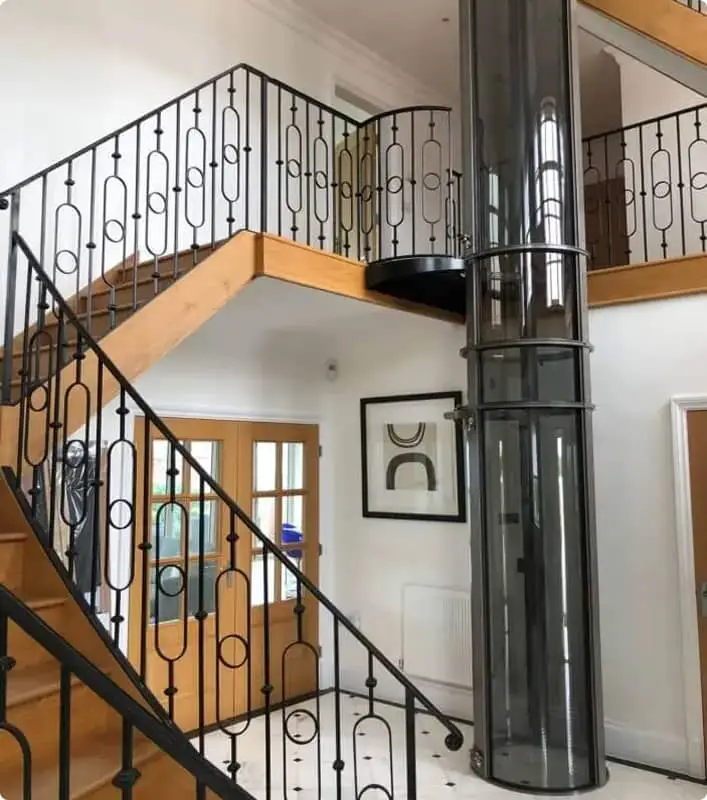
The space near a staircase may be a practical option because it can provide a convenient connection between floors. It may also allow family members to reach the elevator without walking through several rooms.
However, the available space must be measured carefully. Staircase layouts, landings, headroom and nearby walls can affect whether a particular elevator model will fit.
Inside a Living Area
Some homeowners may consider placing an elevator within a living room or another open section of the house. This can be useful where the staircase area is too narrow or unsuitable.
The main consideration is how the elevator will affect the room's layout. Furniture positions, walking routes, natural lighting and privacy should all be considered before choosing this option.
Near an Existing Entrance or Hallway
An entrance area or hallway may offer a convenient route between floors, particularly when several family members use the same access point.
However, the proposed position must not obstruct the main entrance, doors, corridors or emergency escape routes.
The supplier should review the complete floor layout before recommending a final location.
What Building Changes May Be Required for a Retrofit Home Elevator?
One common concern among homeowners is the amount of construction work involved in installing an elevator in an existing house.
The answer depends on the elevator design and the condition of the property. Some residential elevator systems are designed to avoid certain conventional requirements, such as a separate machine room or traditional elevator shaft. Pneumatic elevators are one option homeowners may investigate for this reason.
However, a no-pit or no-shaft design should not be interpreted as meaning that every building is ready for installation without preparation.
A retrofit assessment should establish whether the property requires:
| Building consideration | What needs to be checked |
|---|---|
| Floor openings | Whether openings or other floor modifications are required |
| Floor strength | Whether the installation surface meets the model's requirements |
| Ceiling clearance | Whether there is sufficient space above the proposed installation |
| Landing access | Whether passengers can enter and exit safely at each level |
| Electrical supply | Whether the available supply meets the elevator's requirements |
| Installation access | Whether equipment and components can reach the proposed location |
Do not cut a floor, remove a wall or modify a structural element based on an informal recommendation. Any building alteration should be assessed and approved by the appropriate technical professionals.
How Much Space Does a Pneumatic Elevator Need in a Liberia Home?
Space is a major consideration when selecting a residential elevator for an existing house. Homeowners often want a solution that improves access without taking up too much of the available living area.
Pneumatic elevators are available in different configurations and sizes. The appropriate option depends on the number of users, intended purpose, available footprint and the selected model.
For example, a compact model may suit a homeowner who mainly wants convenient movement between floors. A larger configuration may be more appropriate where wheelchair access or additional passenger space is required.
Before requesting a quote, provide accurate measurements of the proposed installation area. Include the available width, length, floor-to-ceiling height and any nearby obstructions.
Avoid choosing a model based on a general online dimension alone. Ask the supplier for the current technical drawing and confirm that the measurements apply to the exact model being considered.
How Should Monrovia's Coastal Conditions Affect Elevator Planning?
Monrovia's coastal environment is another consideration when planning a residential elevator. Properties close to the Atlantic coast may experience humid conditions and exposure to salty air, particularly where doors, windows or ventilation openings allow outdoor air to enter.
These conditions make it important to discuss the proposed installation environment with the elevator supplier.
During the site assessment, consider:
Humidity: Ask whether the proposed location has adequate environmental conditions for the selected equipment and whether any additional protection is recommended.
Salt exposure: Properties close to the coast should discuss possible exposure to salt-laden air, especially where electrical components or metal surfaces may be affected.
Water entry: Check for roof leaks, damp walls, water seepage and areas where rainwater may enter the proposed elevator location.
Ventilation: Discuss the manufacturer's ventilation and equipment-clearance requirements. Do not assume that a space is suitable simply because it feels cool or has a nearby window.
Maintenance: Ask which parts require periodic inspection and whether the local service arrangement accounts for the property's environmental conditions.
These checks help prevent avoidable installation problems and support better long-term care.
Can a Home Elevator Be Installed in a Monrovia Duplex?
A duplex is a common property type where a home elevator may provide practical value. It can make movement between floors easier for families, particularly where bedrooms, living areas and other frequently used spaces are located on different levels.
However, not every duplex has the same layout. Some have compact staircases, narrow corridors or limited floor space, while others have more open floor plans.
Before selecting a Liberia residential elevator, consider the following:
- Which floors need to be connected?
- Where do family members spend most of their time?
- Will elderly relatives or wheelchair users need access?
- Is there a suitable location that does not interfere with the staircase?
- Can the elevator serve the required floors without creating awkward access routes?
- Is there sufficient space for installation and future maintenance?
A site survey should consider how the elevator will fit into the family's daily routine, not just whether it can physically fit inside the building.
What Should You Prepare Before Requesting a Monrovia Home Elevator Quote?
A detailed enquiry helps the supplier understand the project and recommend a suitable next step. It can also reduce unnecessary delays caused by missing information.
Before requesting a Monrovia quote, prepare the following details:
| Information | What to provide |
|---|---|
| Property location | Your area or neighbourhood in Monrovia |
| Building type | Duplex, detached house or multi-storey residence |
| Number of floors | The floors the elevator needs to serve |
| Proposed location | A staircase corner, hallway or another area |
| Available dimensions | Approximate width, length and height |
| Intended users | Family members, elderly users or wheelchair users |
| Building photographs | Images of the proposed position and surrounding areas |
| Project status | Existing house, renovation or ongoing construction |
If available, include architectural drawings or floor plans. These documents can help the technical team understand the building before arranging a physical assessment.
Photographs should show the proposed installation area from different angles, including the floor above and below where possible.
How Important Is After-Sales Maintenance for a Home Elevator in Liberia?
The installation is only one part of owning a home elevator. Regular maintenance and access to qualified technical support are important for keeping the equipment in suitable operating condition.
Before choosing a supplier, homeowners should understand how maintenance will be handled after installation.
Ask the company:
- Who will provide routine maintenance in Liberia?
- How can homeowners request technical support?
- Are trained technicians available to attend to service requests in Monrovia?
- What is included in the maintenance agreement?
- Which parts require periodic inspection or replacement?
- How are spare parts and technical support arranged?
- What should the household do if the elevator stops unexpectedly?
Do not assume that a supplier's regional presence automatically guarantees a particular response time or local technician availability. Ask for clear details about the actual service arrangement for your property.
A written maintenance agreement can help establish the responsibilities of both the homeowner and the service provider.
What Should You Check Before Choosing a Pneumatic Elevator Supplier in Liberia?
The supplier should be able to explain the elevator's technical requirements, installation process and long-term support arrangements clearly.
For homeowners comparing a pneumatic elevator in Liberia, useful questions include:
- Does the company provide residential pneumatic elevator models?
- Can it assess an existing house before recommending a model?
- Are technical drawings available for the proposed configuration?
- Can the supplier explain the required floor and ceiling clearances?
- Does it provide installation guidance for retrofit properties?
- What safety features are included in the selected model?
- What happens during a power interruption?
- What maintenance and support arrangements are available in Liberia?
Request written information rather than relying only on verbal assurances. This makes it easier to compare suppliers based on technical suitability and support, not just the initial quotation.
Frequently Asked Questions About Home Elevators in Monrovia
Can I install a home elevator in an old house in Monrovia?
Possibly. The age of a building does not automatically determine whether an elevator can be installed. A technical assessment must examine the available space, floor construction, structural conditions, access and the requirements of the selected model.
Is a pneumatic elevator suitable for an existing house in Liberia?
A pneumatic elevator may be suitable for some existing houses because certain models are designed around a different installation arrangement from conventional shaft-based elevators. However, suitability depends on the exact model and the property's conditions. A site survey is necessary before making a decision.
Does a home elevator retrofit require breaking the floor?
Not necessarily. The amount of building modification depends on the elevator design and the existing property. Some models have installation requirements that differ from conventional elevators, but homeowners should obtain model-specific drawings and technical confirmation before assuming that no floor modification is required.
Can a home elevator work in Monrovia's humid climate?
The selected elevator and its installation environment must be assessed for local conditions. Discuss humidity, salt exposure, water entry, ventilation and maintenance with the supplier before installation.
How do I get a home elevator quote in Monrovia?
Prepare the property location, number of floors, intended users, approximate installation dimensions and photographs of the proposed area. Submit these details to the supplier and request a technical assessment before accepting a final quotation.
Who will maintain my home elevator after installation in Liberia?
This depends on the supplier's service arrangements. Ask for written confirmation of maintenance coverage, technician availability, spare parts support and the process for requesting repairs in Monrovia.
Plan Your Monrovia Home Elevator Retrofit Before Construction Begins
Installing a home elevator in an existing Monrovia property starts with understanding the building. The proposed location, floor openings, available space, electrical supply, coastal conditions and after-sales support all influence the final decision.
Pneumatic elevators may offer an option worth exploring for homeowners who want to improve access without automatically committing to a conventional shaft-based arrangement. However, the right model can only be identified after reviewing the property's layout and technical requirements.
PE Lifts can help homeowners explore suitable pneumatic home elevator options and identify the information needed for a retrofit assessment.
Planning a home elevator in Monrovia? Book a Monrovia retrofit consultation with PE Lifts. Share your property location, floor plan and photographs of the proposed installation area to begin the assessment.Adding a home elevator to an existing house in Monrovia can make movement between floors more convenient, especially for families living in duplexes and multi-storey homes. It can also support older relatives, improve accessibility and make a property more practical for long-term use.
However, installing an elevator in an existing building is different from planning one during construction. The house already has established rooms, staircases, floor levels, electrical systems and structural arrangements. Any proposed elevator must fit into these existing conditions without creating unnecessary disruption.
This is why homeowners considering a home elevator in Monrovia should begin with a proper site assessment rather than choosing a model based on appearance alone.
Pneumatic home elevators may be worth considering for suitable residential properties because their installation approach differs from conventional shaft-based arrangements. Nevertheless, the selected model must still be assessed against the building's layout, structural conditions, electrical supply and installation requirements.
This guide explains the important questions to ask before planning a retrofit home elevator in Monrovia, Liberia.
Can an Existing House in Monrovia Accommodate a Home Elevator?
In many cases, an existing house can be assessed for a home elevator installation. However, suitability depends on the available space, floor arrangement, structural conditions and the requirements of the selected elevator model.
A house does not necessarily need to have been designed with an elevator from the beginning. Some homeowners explore the possibility of adapting an existing part of the building, such as a corner of a living area, a suitable space near the staircase or another location that provides access to the required floors.
The important question is not simply whether the house has enough empty space. The proposed position must also provide safe access, suitable floor interfaces and enough clearance for the elevator.
Before making any structural changes, ask the supplier to assess:
- The number of floors the elevator needs to serve.
- The available installation footprint.
- The floor construction and supporting structure.
- The position of doors and access routes.
- The electrical supply available at the property.
- Any restrictions that may affect delivery and installation.
A technical assessment helps establish whether the proposed location is suitable and what preparation may be required.
Where Can You Position a Home Elevator in an Existing Monrovia House?
Choosing the right position is one of the most important parts of a retrofit project. A poorly selected location can interfere with normal household activities, reduce useful living space or make access difficult.
There are several locations worth discussing during a site survey.
Near the Staircase
The space near a staircase may be a practical option because it can provide a convenient connection between floors. It may also allow family members to reach the elevator without walking through several rooms.
However, the available space must be measured carefully. Staircase layouts, landings, headroom and nearby walls can affect whether a particular elevator model will fit.
Inside a Living Area
Some homeowners may consider placing an elevator within a living room or another open section of the house. This can be useful where the staircase area is too narrow or unsuitable.
The main consideration is how the elevator will affect the room's layout. Furniture positions, walking routes, natural lighting and privacy should all be considered before choosing this option.
Near an Existing Entrance or Hallway
An entrance area or hallway may offer a convenient route between floors, particularly when several family members use the same access point.
However, the proposed position must not obstruct the main entrance, doors, corridors or emergency escape routes.
The supplier should review the complete floor layout before recommending a final location.
What Building Changes May Be Required for a Retrofit Home Elevator?
One common concern among homeowners is the amount of construction work involved in installing an elevator in an existing house.
The answer depends on the elevator design and the condition of the property. Some residential elevator systems are designed to avoid certain conventional requirements, such as a separate machine room or traditional elevator shaft. Pneumatic elevators are one option homeowners may investigate for this reason.
However, a no-pit or no-shaft design should not be interpreted as meaning that every building is ready for installation without preparation.
A retrofit assessment should establish whether the property requires:
| Building consideration | What needs to be checked |
|---|---|
| Floor openings | Whether openings or other floor modifications are required |
| Floor strength | Whether the installation surface meets the model's requirements |
| Ceiling clearance | Whether there is sufficient space above the proposed installation |
| Landing access | Whether passengers can enter and exit safely at each level |
| Electrical supply | Whether the available supply meets the elevator's requirements |
| Installation access | Whether equipment and components can reach the proposed location |
Do not cut a floor, remove a wall or modify a structural element based on an informal recommendation. Any building alteration should be assessed and approved by the appropriate technical professionals.
How Much Space Does a Pneumatic Elevator Need in a Liberia Home?
Space is a major consideration when selecting a residential elevator for an existing house. Homeowners often want a solution that improves access without taking up too much of the available living area.
Pneumatic elevators are available in different configurations and sizes. The appropriate option depends on the number of users, intended purpose, available footprint and the selected model.
For example, a compact model may suit a homeowner who mainly wants convenient movement between floors. A larger configuration may be more appropriate where wheelchair access or additional passenger space is required.
Before requesting a quote, provide accurate measurements of the proposed installation area. Include the available width, length, floor-to-ceiling height and any nearby obstructions.
Avoid choosing a model based on a general online dimension alone. Ask the supplier for the current technical drawing and confirm that the measurements apply to the exact model being considered.
How Should Monrovia's Coastal Conditions Affect Elevator Planning?
Monrovia's coastal environment is another consideration when planning a residential elevator. Properties close to the Atlantic coast may experience humid conditions and exposure to salty air, particularly where doors, windows or ventilation openings allow outdoor air to enter.
These conditions make it important to discuss the proposed installation environment with the elevator supplier.
During the site assessment, consider:
Humidity: Ask whether the proposed location has adequate environmental conditions for the selected equipment and whether any additional protection is recommended.
Salt exposure: Properties close to the coast should discuss possible exposure to salt-laden air, especially where electrical components or metal surfaces may be affected.
Water entry: Check for roof leaks, damp walls, water seepage and areas where rainwater may enter the proposed elevator location.
Ventilation: Discuss the manufacturer's ventilation and equipment-clearance requirements. Do not assume that a space is suitable simply because it feels cool or has a nearby window.
Maintenance: Ask which parts require periodic inspection and whether the local service arrangement accounts for the property's environmental conditions.
These checks help prevent avoidable installation problems and support better long-term care.
Can a Home Elevator Be Installed in a Monrovia Duplex?
A duplex is a common property type where a home elevator may provide practical value. It can make movement between floors easier for families, particularly where bedrooms, living areas and other frequently used spaces are located on different levels.
However, not every duplex has the same layout. Some have compact staircases, narrow corridors or limited floor space, while others have more open floor plans.
Before selecting a Liberia residential elevator, consider the following:
- Which floors need to be connected?
- Where do family members spend most of their time?
- Will elderly relatives or wheelchair users need access?
- Is there a suitable location that does not interfere with the staircase?
- Can the elevator serve the required floors without creating awkward access routes?
- Is there sufficient space for installation and future maintenance?
A site survey should consider how the elevator will fit into the family's daily routine, not just whether it can physically fit inside the building.
What Should You Prepare Before Requesting a Monrovia Home Elevator Quote?
A detailed enquiry helps the supplier understand the project and recommend a suitable next step. It can also reduce unnecessary delays caused by missing information.
Before requesting a Monrovia quote, prepare the following details:
| Information | What to provide |
|---|---|
| Property location | Your area or neighbourhood in Monrovia |
| Building type | Duplex, detached house or multi-storey residence |
| Number of floors | The floors the elevator needs to serve |
| Proposed location | A staircase corner, hallway or another area |
| Available dimensions | Approximate width, length and height |
| Intended users | Family members, elderly users or wheelchair users |
| Building photographs | Images of the proposed position and surrounding areas |
| Project status | Existing house, renovation or ongoing construction |
If available, include architectural drawings or floor plans. These documents can help the technical team understand the building before arranging a physical assessment.
Photographs should show the proposed installation area from different angles, including the floor above and below where possible.
How Important Is After-Sales Maintenance for a Home Elevator in Liberia?
The installation is only one part of owning a home elevator. Regular maintenance and access to qualified technical support are important for keeping the equipment in suitable operating condition.
Before choosing a supplier, homeowners should understand how maintenance will be handled after installation.
Ask the company:
- Who will provide routine maintenance in Liberia?
- How can homeowners request technical support?
- Are trained technicians available to attend to service requests in Monrovia?
- What is included in the maintenance agreement?
- Which parts require periodic inspection or replacement?
- How are spare parts and technical support arranged?
- What should the household do if the elevator stops unexpectedly?
Do not assume that a supplier's regional presence automatically guarantees a particular response time or local technician availability. Ask for clear details about the actual service arrangement for your property.
A written maintenance agreement can help establish the responsibilities of both the homeowner and the service provider.
What Should You Check Before Choosing a Pneumatic Elevator Supplier in Liberia?
The supplier should be able to explain the elevator's technical requirements, installation process and long-term support arrangements clearly.
For homeowners comparing a pneumatic elevator in Liberia, useful questions include:
- Does the company provide residential pneumatic elevator models?
- Can it assess an existing house before recommending a model?
- Are technical drawings available for the proposed configuration?
- Can the supplier explain the required floor and ceiling clearances?
- Does it provide installation guidance for retrofit properties?
- What safety features are included in the selected model?
- What happens during a power interruption?
- What maintenance and support arrangements are available in Liberia?
Request written information rather than relying only on verbal assurances. This makes it easier to compare suppliers based on technical suitability and support, not just the initial quotation.
Frequently Asked Questions About Home Elevators in Monrovia
Can I install a home elevator in an old house in Monrovia?
Possibly. The age of a building does not automatically determine whether an elevator can be installed. A technical assessment must examine the available space, floor construction, structural conditions, access and the requirements of the selected model.
Is a pneumatic elevator suitable for an existing house in Liberia?
A pneumatic elevator may be suitable for some existing houses because certain models are designed around a different installation arrangement from conventional shaft-based elevators. However, suitability depends on the exact model and the property's conditions. A site survey is necessary before making a decision.
Does a home elevator retrofit require breaking the floor?
Not necessarily. The amount of building modification depends on the elevator design and the existing property. Some models have installation requirements that differ from conventional elevators, but homeowners should obtain model-specific drawings and technical confirmation before assuming that no floor modification is required.
Can a home elevator work in Monrovia's humid climate?
The selected elevator and its installation environment must be assessed for local conditions. Discuss humidity, salt exposure, water entry, ventilation and maintenance with the supplier before installation.
How do I get a home elevator quote in Monrovia?
Prepare the property location, number of floors, intended users, approximate installation dimensions and photographs of the proposed area. Submit these details to the supplier and request a technical assessment before accepting a final quotation.
Who will maintain my home elevator after installation in Liberia?
This depends on the supplier's service arrangements. Ask for written confirmation of maintenance coverage, technician availability, spare parts support and the process for requesting repairs in Monrovia.
Plan Your Monrovia Home Elevator Retrofit Before Construction Begins
Installing a home elevator in an existing Monrovia property starts with understanding the building. The proposed location, floor openings, available space, electrical supply, coastal conditions and after-sales support all influence the final decision.
Pneumatic elevators may offer an option worth exploring for homeowners who want to improve access without automatically committing to a conventional shaft-based arrangement. However, the right model can only be identified after reviewing the property's layout and technical requirements.
PE Lifts can help homeowners explore suitable pneumatic home elevator options and identify the information needed for a retrofit assessment.
Planning a home elevator in Monrovia? Book a Monrovia retrofit consultation with PE Lifts. Share your property location, floor plan and photographs of the proposed installation area to begin the assessment.