
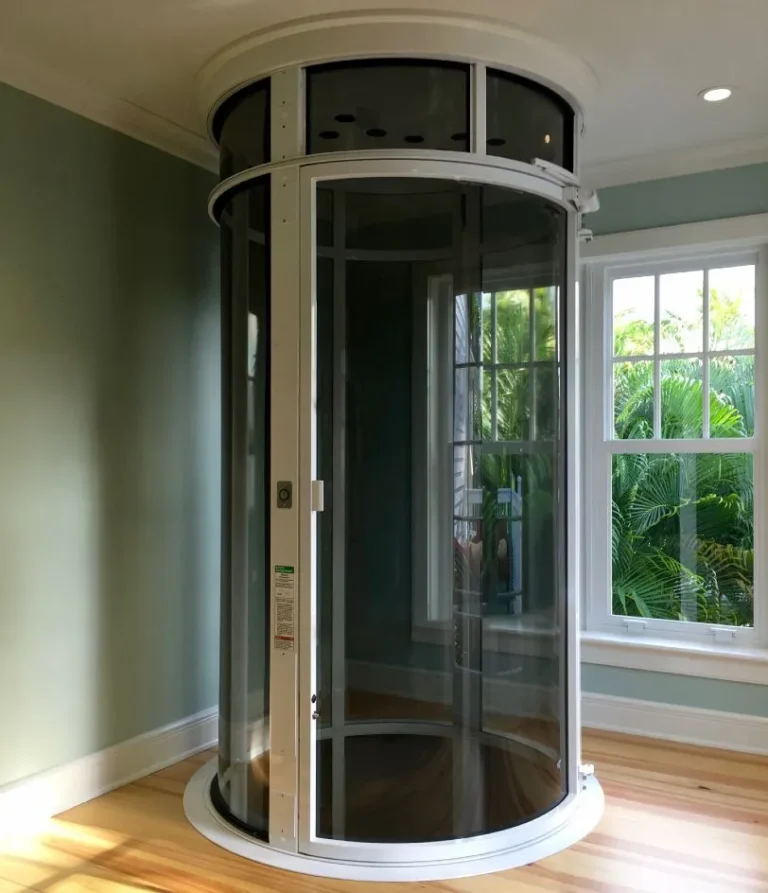
Designing a residential elevator for tropical West African homes requires careful management of ventilation, heat, and humidity to ensure reliable operation. There is no universal ventilation rule, as requirements depend entirely on the specific elevator model, the manufacturer’s environmental specifications, and the building’s unique microclimate. To prevent heat accumulation and moisture damage, homeowners and architects must verify the approved equipment location, required clearances, and airflow needs during a professional site assessment. Planning these factors before installation guarantees the system operates safely and efficiently in cities like Lagos, Accra, Lomé, and Abidjan.
Why Does Climate Matter When Installing a Home Elevator?
An elevator operates through a combination of electrical, mechanical, and control components, all of which have specific environmental requirements. In tropical environments, installation teams must carefully evaluate ambient temperature, air circulation, operational heat generation, humidity, and potential exposure to dust or moisture. A poorly ventilated equipment space can become significantly warmer than surrounding rooms, accelerating component wear. Therefore, a suitable installation plan must account for both the regional climate and the precise microclimate at the proposed elevator location.
How Does Heat Affect Elevator Equipment Performance?
Electrical and mechanical components naturally produce or absorb heat during operation. If this heat cannot dissipate according to the equipment design, the surrounding temperature rises, potentially affecting component performance, operating reliability, and overall service life. Homeowners should ask the supplier to identify which specific components generate heat and what ambient operating temperatures the manufacturer specifies. It is crucial to determine if the equipment requires dedicated ventilation, minimum clearances, or restrictions against installation in tightly enclosed spaces, rather than assuming all elevators share the same ventilation needs.
What Should Homeowners Know About Pneumatic Elevator Turbine Heat?
Pneumatic vacuum elevators utilize air pressure differences to move the cabin, relying on a turbine or model-specific vacuum equipment. Because this assembly contains sensitive electrical and mechanical parts, its placement and surrounding environment require precise assessment. Homeowners must confirm the approved location of the turbine, the manufacturer's required clearance around the equipment, and whether the proposed enclosure allows for adequate airflow and convenient maintenance access. Do not assume a turbine can be placed in any enclosed area; the correct arrangement depends strictly on the selected model’s technical documentation.
How Should Elevator Ventilation Be Planned in Lagos and Accra?
Cities like Lagos and Accra experience warm, humid conditions with seasonal variations. When planning a home elevator in these regions, the building’s natural heat and moisture management strategies must be integrated into the design. An elevator installed near a sun-exposed external wall will face different environmental stresses than one positioned in a shaded, internal corridor. Planners should evaluate air circulation, potential heat accumulation from direct sunlight or nearby appliances, and moisture protection. A professional site assessment is essential, as general city-level climate data cannot accurately predict the operating conditions of a specific installation site.
Why Is Humidity Protection Critical for Elevator Longevity?
Humidity is a significant environmental factor in West African buildings, as excess moisture can contribute to corrosion, electrical connection failures, and condensation. The risk level depends on the equipment's enclosure protection rating and its operating environment. Homeowners should explicitly ask the elevator supplier about the environmental protection provided for all electrical and mechanical components. If the installation is near an external wall, roof space, or exposed balcony, additional measures may be necessary to prevent water ingress and ensure ventilation openings are protected against rainwater, strictly following the manufacturer's specifications.
What Does the 45-Degree Elevator Clearance Consideration Mean?
The phrase "45-degree elevator clearance" occasionally appears in installation discussions regarding space around equipment or the relationship between the elevator shaft and surrounding building elements. However, it should never be treated as a universal ventilation or installation rule. The required clearance depends entirely on the specific equipment design and the manufacturer's technical documentation. If a supplier mentions this requirement, homeowners should ask them to specify which component it concerns, whether it relates to airflow or access, and where it is explicitly stated in the installation manual for the selected model.
How Should Equipment Clearances Be Planned Effectively?
Equipment clearances define the mandatory spaces required around components for safe operation, airflow, inspection, and maintenance. These must be established and verified before any building work is finalized. For pneumatic elevators, the proposed turbine location must be cross-referenced with the manufacturer’s instructions. A practical planning checklist should confirm the approved turbine position, required ventilation arrangements, manufacturer-specified heat clearances, technician access for servicing, moisture protection measures, and the suitability of the electrical supply. The installer must validate these final requirements during a comprehensive technical site assessment. [Internal Link Suggestion: Link to PE Lifts installation planning guide].
What Steps Should Architects and Homeowners Take Before Installation?
The optimal time to address ventilation and heat management is before finalizing the elevator location. For new construction, architects should coordinate directly with the elevator supplier during the design phase. For existing homes, a detailed site inspection is necessary to identify spatial and environmental limitations. Before approving any installation, provide the supplier with the building location, proposed elevator position, number of floors to be served, available equipment space, and details regarding potential heat sources or moisture exposure. This allows the supplier to assess the arrangement against the specific model's technical requirements.
Frequently Asked Questions
1. Does a home elevator need ventilation in tropical West Africa?
Yes, ventilation requirements depend on the elevator design and installed equipment. Some components require specific airflow or environmental conditions, so always follow the manufacturer's installation instructions.
2. Can high temperatures affect a pneumatic home elevator?
High ambient temperatures can affect electrical and mechanical equipment if they exceed the manufacturer's specified operating conditions. The proposed turbine location must be assessed before installation.
3. Does humidity affect home elevator equipment in coastal cities?
Yes, humidity can contribute to corrosion and moisture-related problems where equipment is not adequately protected. Suitable equipment selection, installation, and maintenance help address these environmental considerations.
4. Does a pneumatic elevator turbine need a separate ventilation room?
Not necessarily. The requirement depends entirely on the selected model and its installation instructions. Ask the supplier to confirm the approved equipment location, ventilation needs, and required clearances.
5. Is a 45-degree clearance required for every home elevator?
No universal 45-degree clearance rule should be assumed. The meaning and applicability of this requirement must be confirmed using the relevant manufacturer's technical documentation.
6. What information is needed for a home elevator installation assessment?
Provide the building location, proposed installation area, number of floors, available space, and details about whether the equipment location is enclosed or exposed to help the supplier assess environmental requirements.
7. How does building preparation impact elevator heat management?
Proper structural planning ensures adequate airflow, shading, and distance from external heat sources, preventing the equipment space from becoming warmer than the surrounding rooms.
8. What power supply considerations are necessary for tropical installations?
A stable electrical supply with appropriate protective arrangements is required to prevent voltage fluctuations or surges from damaging sensitive elevator components in regions with variable grid stability.
9. How often should a home elevator be serviced in humid climates?
Servicing frequency depends on the manufacturer’s instructions and specific lift design. Humid environments may necessitate strict adherence to recommended maintenance schedules to prevent moisture-related wear.
10. How do I choose the right elevator company for my West African home?
Select a specialist that provides transparent, model-specific technical data, conducts thorough site assessments, offers clear warranty terms, and demonstrates reliable local technical support capabilities.
Conclusion
A reliable home elevator installation requires more than selecting a model and identifying available space. Temperature, humidity, equipment airflow, and maintenance access must be integral to the planning process. For homeowners and architects in West Africa considering a pneumatic home elevator, PE Lifts can help assess the proposed installation location and explain the technical requirements of the selected model. Contact PE Lifts to discuss your floor plan, measurements, number of floors, and intended use to receive a professional assessment and dedicated project support.