
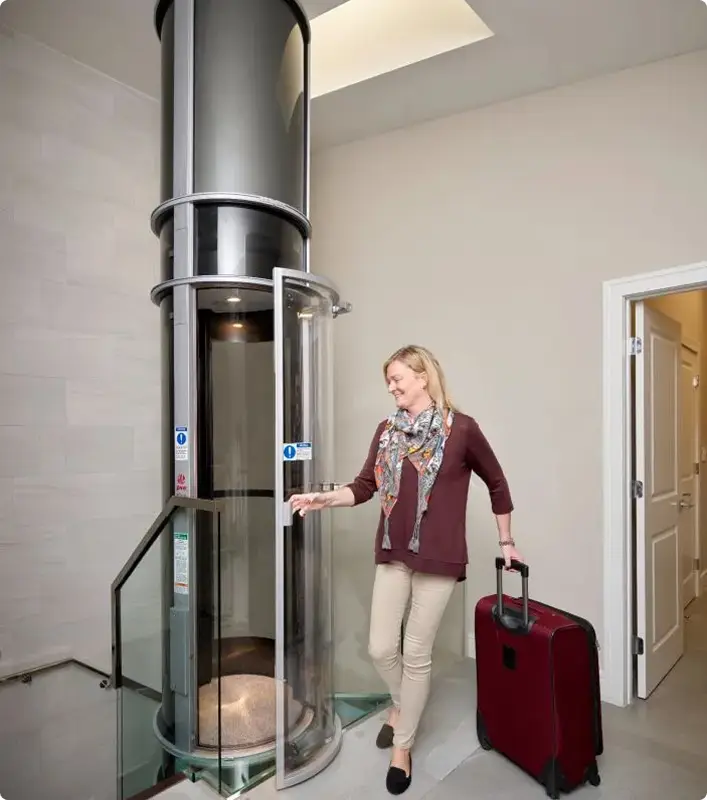
Imagine a quiet evening in your family home. The children are asleep, and you are relaxing in the living room. You consider installing a pneumatic home elevator to improve accessibility for elderly parents or simply to add convenience to your multi-story house. However, a common concern arises: will the elevator be too noisy? Will the sound of the lift disturb conversations, wake sleeping children, or disrupt the peaceful atmosphere of your home? Understanding pneumatic elevator noise is essential for making an informed decision. This guide explains what a published operating range of 55–60 dB means in practical terms and how thoughtful planning can ensure your new quiet home lift integrates seamlessly into your family’s daily life.
What Does 55–60 dB Mean for Your Home?
When manufacturers specify a pneumatic elevator noise level of 55–60 dB, they refer to the sound pressure level measured under specific testing conditions. To understand this figure, it helps to compare it with familiar everyday sounds. A normal conversation typically ranges between 50 and 60 dB. Background music in a restaurant might sit around 60 dB. Therefore, a pneumatic elevator operating at 55–60 dB produces a sound level comparable to moderate speech or low-volume background noise.
It is important to note that these comparisons are not exact equivalents. Sound perception varies significantly based on distance from the source, the acoustic properties of the room, and the ambient noise level of the environment. A sound that seems unobtrusive during the day may appear more noticeable in a silent house at night. The 55–60 dB range indicates that the elevator is designed to operate within a moderate acoustic footprint, but it is not silent. Understanding this distinction helps homeowners set realistic expectations.
Is a Pneumatic Elevator Noisy at Night?
Many homeowners worry about whether a vacuum lift is noisy at night. The answer depends largely on the surrounding environment. During the day, ambient noises such as traffic, household activities, and outdoor sounds can mask the operation of the elevator. At night, when the house is quiet, the same sound level may seem more prominent because there is less background noise to distract the ear.
However, several factors influence whether the noise becomes disruptive. The distance between the elevator shaft and bedrooms plays a crucial role. If the elevator is located far from sleeping areas, the sound will attenuate significantly before reaching them. Additionally, the construction of walls and floors affects sound transmission. Solid masonry walls block sound more effectively than lightweight partitions. Therefore, while the elevator itself operates within a consistent decibel range, the perceived noise inside a bedroom can vary greatly depending on the home’s layout and building materials.
Factors Influencing Residential Elevator Noise
Several technical and architectural factors determine how much noise penetrates into living spaces. Understanding these elements allows homeowners and architects to plan effectively.
- Turbine and Power-Unit Location: The turbine is the primary source of sound in a pneumatic elevator system. Its placement relative to living areas is critical. Locating the turbine away from sensitive rooms reduces direct sound transmission.
- Distance from Bedrooms: Sound intensity decreases as distance increases. Placing the elevator shaft and turbine as far as possible from bedrooms and study areas minimizes disturbance.
- Wall Construction and Sound Transmission: Heavy, dense walls provide better sound insulation than thin or hollow structures. The quality of doors and windows near the elevator also affects noise leakage.
- Floor Openings and Architectural Details: Large open-plan designs may allow sound to travel more freely. Conversely, enclosed shafts and proper sealing around floor openings can help contain noise.
- Operating Conditions and Maintenance: A well-maintained elevator operates more smoothly and quietly. Regular servicing ensures that mechanical components remain aligned and lubricated, preventing unnecessary vibration or rattling.
Where Should You Place a Pneumatic Elevator in a Family Home?
Strategic placement is the most effective way to manage elevator decibel levels in a residential setting. Architects and homeowners should consider the following guidelines during the design stage:
- Avoid Sensitive Areas: Do not place the elevator shaft or turbine immediately adjacent to bedrooms, nurseries, or home offices if possible. Use circulation areas, hallways, or stairwells as buffer zones.
- Consider Turbine Location: Identify where the turbine will be installed early in the design process. Ensure it is positioned in a utility space, outside wall, or area with minimal acoustic impact on living quarters.
- Evaluate Nearby Rooms: Map out the locations of children’s rooms, elderly residents’ bedrooms, and study areas. Assess the potential noise path from the elevator to these spaces.
- Coordinate with Layout: Align the elevator with structural walls that offer better sound insulation. Avoid placing it against lightweight partition walls that separate sleeping areas.
- Consult Before Finalizing: Engage with the elevator supplier before finalizing the building layout. They can provide specific guidance on optimal placement based on the model’s technical requirements.
Practical Ways to Reduce Perceived Noise
While you cannot change the fundamental operating characteristics of the elevator, you can influence how the sound is experienced in your home. Proper equipment positioning is the first step. Ensure the turbine is installed according to the manufacturer’s specifications, often in a location that allows for natural sound dissipation.
Building design also plays a vital role. Using dense materials for walls surrounding the shaft can help block sound. Ensuring that doors and windows near the elevator are well-sealed prevents noise leakage. Proper installation by qualified technicians ensures that the system operates smoothly without excessive vibration. Finally, routine maintenance keeps the elevator in optimal condition, preventing wear-related noises that could increase over time. Do not attempt unauthorized modifications, such as enclosing the turbine in improvised boxes, as this can restrict ventilation and void warranties.
Understanding Decibel Levels: A Comparison
| Sound Source | Approximate dB Level | What Homeowners Should Understand |
|---|---|---|
| Pneumatic Elevator Operation | 55–60 dB | Comparable to normal conversation. Noticeable but generally not disruptive if placed correctly. |
| Normal Conversation | 50–60 dB | Similar volume to the elevator. Shows that the lift is not louder than everyday speech. |
| Quiet Office / Library | 40–50 dB | Quieter than the elevator. Highlights why distance and insulation matter for quiet zones. |
| Background Music | 60–70 dB | Slightly louder than the elevator. Demonstrates that the lift is within a moderate range. |
What Should Homeowners Ask Before Installing a Vacuum Elevator?
Before proceeding with installation, ask your provider specific questions to clarify noise expectations:
- Where exactly will the turbine and power unit be positioned in my home?
- Does the published 55–60 dB rating refer to the cabin interior, the turbine, or a specific measurement point?
- At what distance from the source was this noise level measured?
- Does the sound level change during different stages of operation, such as starting, moving, or stopping?
- How might the proposed location affect nearby bedrooms or living areas?
- What installation and maintenance practices do you recommend to support quieter operation?
Planning for West African Homes
In Nigeria, Ghana, Togo, Benin Republic, Senegal, and Côte d'Ivoire, residential architecture varies widely. From compact urban duplexes to spacious multi-generational villas, noise planning is relevant to all. In densely built urban areas, homes may share walls with neighbors, making internal noise control even more important. In larger family compounds, ensuring that the elevator does not disturb elderly relatives or young children requires careful zoning of living spaces. Regardless of the home type, considering acoustic comfort during the design phase leads to a more harmonious living environment.
How PE Lifts Can Help
At PE Lifts, we understand that every home is unique. Our team can help you assess the best placement for your pneumatic elevator to balance convenience and acoustic comfort. We encourage a site or design review to evaluate your proposed location, discuss turbine positioning, and identify any potential noise concerns before installation begins. This proactive approach ensures that your new lift enhances your home without compromising peace and quiet.
Concerned about pneumatic elevator noise in your home? Request a noise and placement review from PE Lifts to understand the expected operating sound and identify a suitable installation location for your family.
FAQs
1. Is a pneumatic elevator completely silent? No, pneumatic elevators are not completely silent. They operate within a published range of 55–60 dB, which is comparable to normal conversation. Proper placement helps minimize perceived noise.
2. Can I install a soundproof box around the turbine? No, you should not install improvised enclosures around the turbine. This can restrict ventilation, cause overheating, and void the warranty. Always follow the manufacturer’s installation guidelines.
3. Does the noise level increase as the elevator gets older? With regular maintenance, the noise level should remain consistent. Lack of maintenance may lead to increased vibration or rattling, so adhering to service schedules is important for quiet operation.
4. Will my neighbors hear the elevator? If the elevator is installed internally and your home has standard wall construction, neighbors are unlikely to hear it. However, in attached housing, proper placement away from shared walls is advisable.
5. How far should the elevator be from a bedroom? There is no fixed distance, but greater distance reduces perceived noise. Ideally, place the elevator and turbine as far as possible from bedrooms, using hallways or other rooms as buffers.