
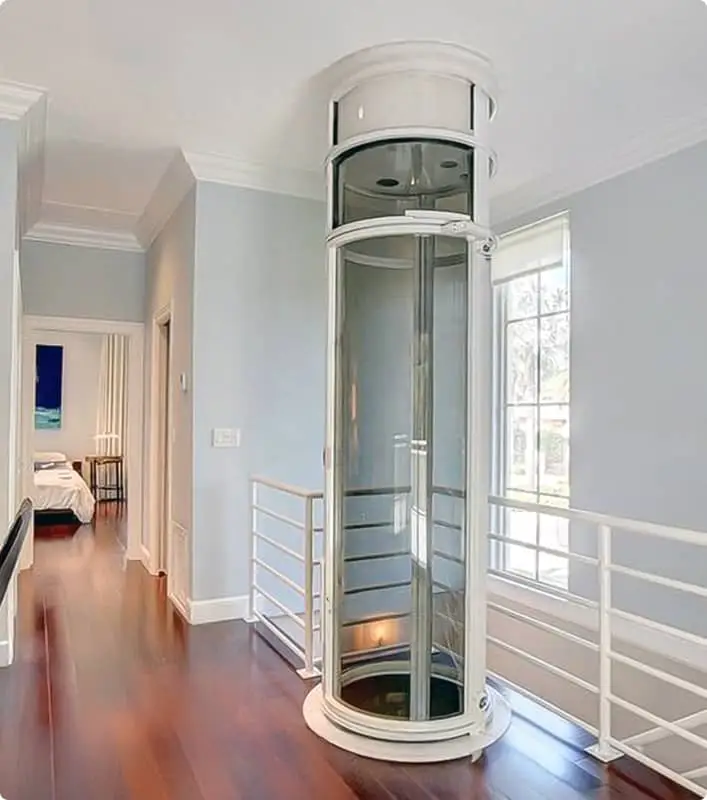
Home elevators are becoming a common feature in modern homes across West Africa. As more people build multi-storey houses, the need for easy movement, comfort, and accessibility continues to grow.
But not all elevators are the same.
If you are planning to install one, it is important to understand the different types of home elevators available and which one suits your home best.
What are the main types of home elevators?
There are three main types used in West Africa:
- Pneumatic (vacuum) elevators
- Hydraulic elevators
- Traction elevators
Each type has its own features, cost, and installation requirements.
What is a pneumatic (vacuum) elevator?
A pneumatic elevator uses air pressure to move the cabin between floors. Unlike traditional systems, it does not require cables or oil.
Because of this design, it is compact and easy to install. In addition, it uses power only when moving upward, which makes it very energy efficient.
For this reason, many homeowners choose pneumatic elevators for small spaces and existing buildings.
Key Features:
- No cables or oil
- No machine room required
- Compact and modern design
- Uses power only when going up
Benefits:
- Very energy efficient
- Perfect for small spaces
- Fast installation (2–3days)
- Works well with inverters and generators
Best For:
- Existing homes
- Small houses
- Homeowners with limited space
What is a hydraulic elevator?
Hydraulic elevators operate using fluid pressure to lift the cabin. As a result, they provide a smooth and stable ride.
However, they require more space and a machine room. In addition, they tend to use more energy compared to other systems.
Even so, they remain a good option for new buildings where space is not a problem.
Key Features:
- Strong lifting capacity
- Smooth and quiet ride
- Requires a machine room
Benefits:
- Reliable performance
- Good for carrying heavier loads
- Suitable for larger homes
Limitations:
- Uses more energy
- Requires more space
- Higher maintenance
Best For:
- New buildings
- Homes with enough space
What is a traction elevator?
raction elevators use a system of ropes and counterweights. Because of this, they are more energy efficient than hydraulic systems.
In addition, they are suitable for taller buildings and provide fast movement between floors.
On the other hand, installation can be more complex. Therefore, they are often used in larger residential properties.
Key Features:
- Motor-driven system
- No hydraulic oil
- Can be machine-room-less (MRL)
Benefits:
- Energy efficient compared to hydraulic
- Suitable for taller buildings
- Smooth and fast operation
Limitations:
- More complex installation
- Requires moderate space
Best For:
- Multi-storey homes
- Larger residential buildings
How do these elevator types compare?
Comparison Table: Home Elevator Types in West Africa
| Feature | Pneumatic | Hydraulic | Traction |
|---|---|---|---|
| Space Needed | Very small | Medium | Medium |
| Energy Use | Low | High | Medium |
| Installation Time | 2–3days | 5–6 weeks | 3–4 weeks |
| Maintenance | Low | High | Medium |
| Machine Room | Not required | Required | Optional |
| Best Use | Small homes | New buildings | Taller homes |
Which type of home elevator is best for you?
Choosing the right elevator depends on your specific needs.
For example, if your home has limited space, a pneumatic elevator is the best option. On the other hand, if you are building a new house with enough room, a hydraulic system may work well.
Meanwhile, traction elevators are ideal for homes with more floors.
Choose Pneumatic Elevator if:
- You have limited space
- You want fast installation
- You need energy efficiency
Choose Hydraulic Elevator if:
- You are building a new home
- You need to carry heavy loads
- You have enough space
Choose Traction Elevator if:
- Your home has many floors
- You want a balance between speed and efficiency
What factors should you consider before choosing?
Before selecting an elevator, consider:
1. Space availability
Some elevators need more room than others
2. Power supply
Choose energy-efficient systems if power is unstable
3. Budget
Different systems have different costs
4. Building type
New buildings allow more flexibility than existing homes
5. Maintenance needs
Some elevators require more servicing than others
Are some elevator types more popular in West Africa?
Yes. Many homeowners prefer pneumatic elevators because:
- They save space
- They are easy to install
- They use less electricity
This makes them ideal for modern homes in the region.
Can all elevator types work with power challenges?
Most modern elevators are designed to work in West Africa.
- They can run on generators or inverters
- They include backup safety systems
- Energy-efficient models reduce power usage
Frequently Asked Questions (FAQs)
1. What is the most popular home elevator type?
Pneumatic elevators are the most popular due to low energy use and easy installation.
2. Which elevator is best for small homes?
Pneumatic elevators are best for small spaces.
3. Are hydraulic elevators still used?
Yes, especially in new buildings with enough space.
4. Which elevator uses the least electricity?
Pneumatic elevators use the least energy.
5. Can I install a traction elevator in my home?
Yes, especially if your home has multiple floors.
6. Do all elevators need a machine room?
No. Pneumatic elevators do not need one, and some traction elevators don’t either.
7. How do I choose the right elevator?
Consider your space, budget, and power supply.
Final Thoughts
Understanding the different types of home elevators is the first step to making the right choice.
In West Africa, the three main options—pneumatic, hydraulic, and traction elevators—each offer unique benefits.
- Pneumatic → Best for space and energy efficiency
- Hydraulic → Best for strength and smoothness
- Traction → Best for taller homes
Home elevators are becoming an important feature in modern West African homes.
While pneumatic elevators offer space-saving and energy efficiency, hydraulic systems provide strength and smooth performance. At the same time, traction elevators are suitable for taller buildings.
Ultimately, the best choice depends on your space, budget, and lifestyle needs.