
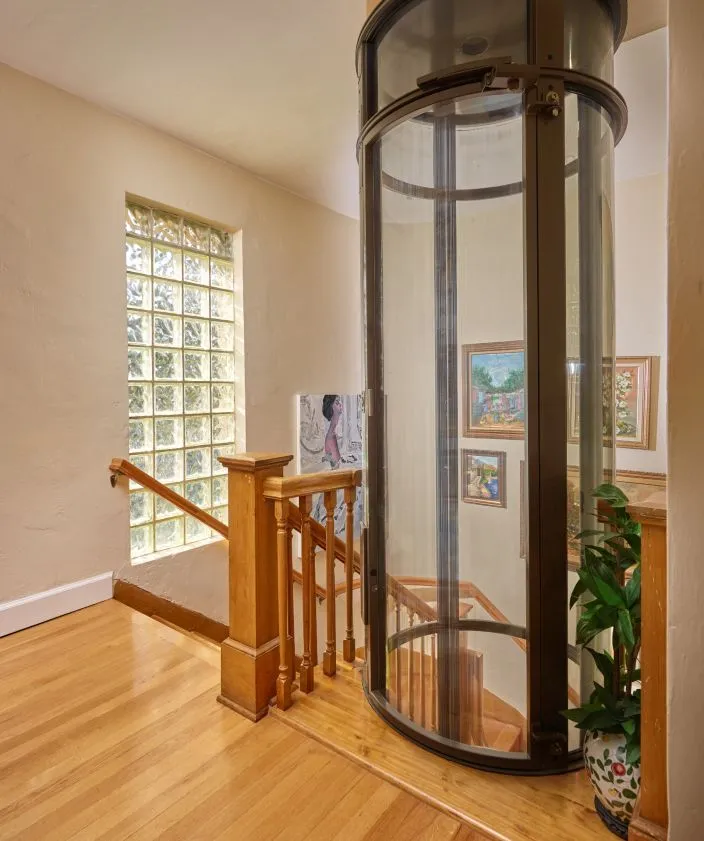
Choosing the right pneumatic elevator Nigeria residents can trust involves balancing architectural vision with practical family needs. For a modern duplex, the ideal solution must offer seamless vertical mobility without consuming valuable floor space or requiring heavy structural changes. A pneumatic vacuum elevator provides this balance by using air pressure technology to move smoothly between floors, fitting neatly into open-plan layouts while enhancing the home’s aesthetic appeal.
The Challenge of Designing a Modern Nigerian Duplex
Chidi is an architect based in Lagos who specialises in contemporary residential designs. He was recently commissioned by the Adekunle family to design their dream home in a quiet suburb of Ikeja. The family wanted a spacious three-storey duplex that felt open, airy, and connected. They loved the idea of large glass windows, high ceilings, and minimal internal walls.
However, as Chidi developed the initial floor plans, a practical issue emerged. The matriarch of the family, Mrs. Adekunle, mentioned that climbing stairs daily was becoming tiring. Her husband also noted that carrying laundry or groceries between three floors was inconvenient. They wanted a home that was beautiful but also functional for every generation living under one roof.
The family asked Chidi if they could include a residential elevator. Chidi’s immediate concern was space. Traditional hydraulic or traction elevators usually require a dedicated machine room, a deep pit, and substantial shaft construction. These requirements would eat into the living area and complicate the clean, minimalist lines he had designed. He needed a solution that respected the architecture while solving the family’s mobility needs.
What Is a Pneumatic Vacuum Elevator?
To find a suitable option, Chidi researched pneumatic elevator for modern homes in Nigeria technologies. He discovered pneumatic vacuum elevators, which operate differently from conventional lifts. Instead of cables, counterweights, or hydraulic pistons, these elevators use air pressure.
A turbine at the top of the tube creates a vacuum above the cabin, pulling it upward. To descend, the system slowly releases air, allowing gravity to lower the cabin smoothly and safely. This technology eliminates the need for a machine room or a deep pit. The structure is self-supporting, meaning it does not rely on the building’s walls for stability. This feature was perfect for Chidi’s design, as it allowed the elevator to stand as a sculptural element within the home rather than a hidden utility.
Why Did Space and Design Matter So Much?
In many Nigerian homes, floor space is precious. The Adekunles wanted an open-plan ground floor where the living room, dining area, and kitchen flowed into one another. Installing a traditional elevator shaft would have required building thick concrete walls and sacrificing a significant portion of this open space.
Chidi explained to the family that a residential pneumatic elevator could fit into a much smaller footprint. Because the tube is cylindrical and transparent, it takes up less visual space. It allows light to pass through, maintaining the airy feel of the duplex. This panoramic visibility means the elevator does not feel like a box closing off the room. Instead, it becomes a modern design feature that complements the glass and steel elements of the house.
Which Model Fits a Family Home?
Chidi knew that not all elevators are the same. He contacted PE Lifts, a specialist provider of pneumatic vacuum elevator solutions in Nigeria, to understand the available options. He learned that model selection depends on passenger capacity, available diameter, and the number of stops.
PE Lifts offered several models, including the PVE 30, PVE 37, PVE 52, and The Cube. Chidi evaluated them against the Adekunle’s needs:
| Model | Outer Diameter | Typical Use Case | Key Consideration |
|---|---|---|---|
| PVE 30 | Approx. 760 mm | Single passenger, compact spaces | Ideal for tight spots or single users |
| PVE 37 | Approx. 940 mm | Two passengers, standard homes | Balanced size for most family duplexes |
| PVE 52 | Approx. 1320 mm | Wheelchair access, larger groups | Requires more floor space |
| The Cube | Square footprint | Modern architectural statements | Unique design for specific aesthetics |
For the Adekunle home, the PVE 37 emerged as a strong candidate. It offered enough room for two people or a person with groceries, fitting comfortably into the corner of the living area without dominating the room. Chidi noted that the PVE 52 would be necessary if wheelchair accessibility was a strict requirement, but it would need a larger floor opening. The PVE 30 was too small for family use, and The Cube offered a different aesthetic that might not match the curved glass themes they preferred.
How Does Installation Work in an Existing or New Build?
One of the family’s biggest worries was the construction mess. They had heard stories of elevator installations taking weeks and involving noisy drilling and dusty concrete work. Chidi reassured them that pneumatic elevator installation is significantly cleaner and faster.
Because these elevators are self-supporting, they do not require extensive civil works. The main requirement is a circular opening in the floor slabs for the tube to pass through. In a new build like the Adekunle project, this is easy to plan during the structural phase. Chidi coordinated with the structural engineer to ensure the floor openings were correctly positioned and reinforced.
The electrical requirements are also straightforward. The system typically needs a standard single-phase power supply. PE Lifts technicians handle the assembly of the aluminum and polycarbonate tube on-site. The entire process is quicker than traditional elevator installations, often causing minimal disruption to the household.
Why Involve an Elevator Specialist Early?
Chidi realised that waiting until the end of the design process would have been a mistake. By involving an elevator specialist early, he could ensure the floor openings were perfectly aligned with the structural beams. He also learned about the importance of ceiling height and headroom requirements.
A professional site survey is essential. Even in a new build, verifying the exact dimensions and load-bearing capacities ensures that the chosen model fits safely. Chidi advised the Adekunles that while pneumatic elevators are flexible, they are not magic. They require precise planning. Working with PE Lifts allowed him to get accurate technical data for his drawings, ensuring no last-minute surprises.
Frequently Asked Questions
1. Do pneumatic elevators require a machine room? No. One of the main advantages of pneumatic vacuum elevators is that they do not need a separate machine room. The machinery is integrated into the top of the tube, saving valuable space in your home.
2. Can a pneumatic elevator be installed in an existing Nigerian home? Yes, but it requires careful planning. You need to create openings in your floor slabs. A professional site assessment is crucial to determine if your existing structure can support the installation without major renovations.
3. What happens if there is a power outage? Pneumatic elevators are designed with safety in mind. In the event of a power failure, the cabin will slowly descend to the nearest landing using gravity, and the doors can be opened manually to allow passengers to exit safely.
4. How much space does a pneumatic elevator take up? The space required depends on the model. The PVE 30 has a smaller footprint, while the PVE 52 is larger to accommodate wheelchairs. Generally, they require less space than traditional elevators because they do not need a shaft wall or machine room.
5. Are pneumatic elevators safe for children and elderly users? Yes. They come with multiple safety features, including emergency brakes, obstruction sensors, and secure locking mechanisms. The smooth acceleration and deceleration also make them comfortable for users of all ages.
Conclusion
The Adekunle family’s journey shows that adding vertical mobility to a modern home does not mean compromising on style or space. By choosing a pneumatic elevator Nigeria homeowners can rely on, they gained convenience without sacrificing the open, light-filled design they loved. Chidi’s experience highlights the importance of early planning and professional guidance.
For architects, developers, and homeowners in Nigeria, integrating a pneumatic elevator for modern homes in Nigeria is a smart investment in comfort and accessibility. It transforms a multi-storey house into a truly inclusive home. If you are considering a residential elevator for your project, contact PE Lifts today. Their team of specialists can provide a professional assessment, help you choose the right model, and ensure your elevator integrates seamlessly into your architectural vision.