
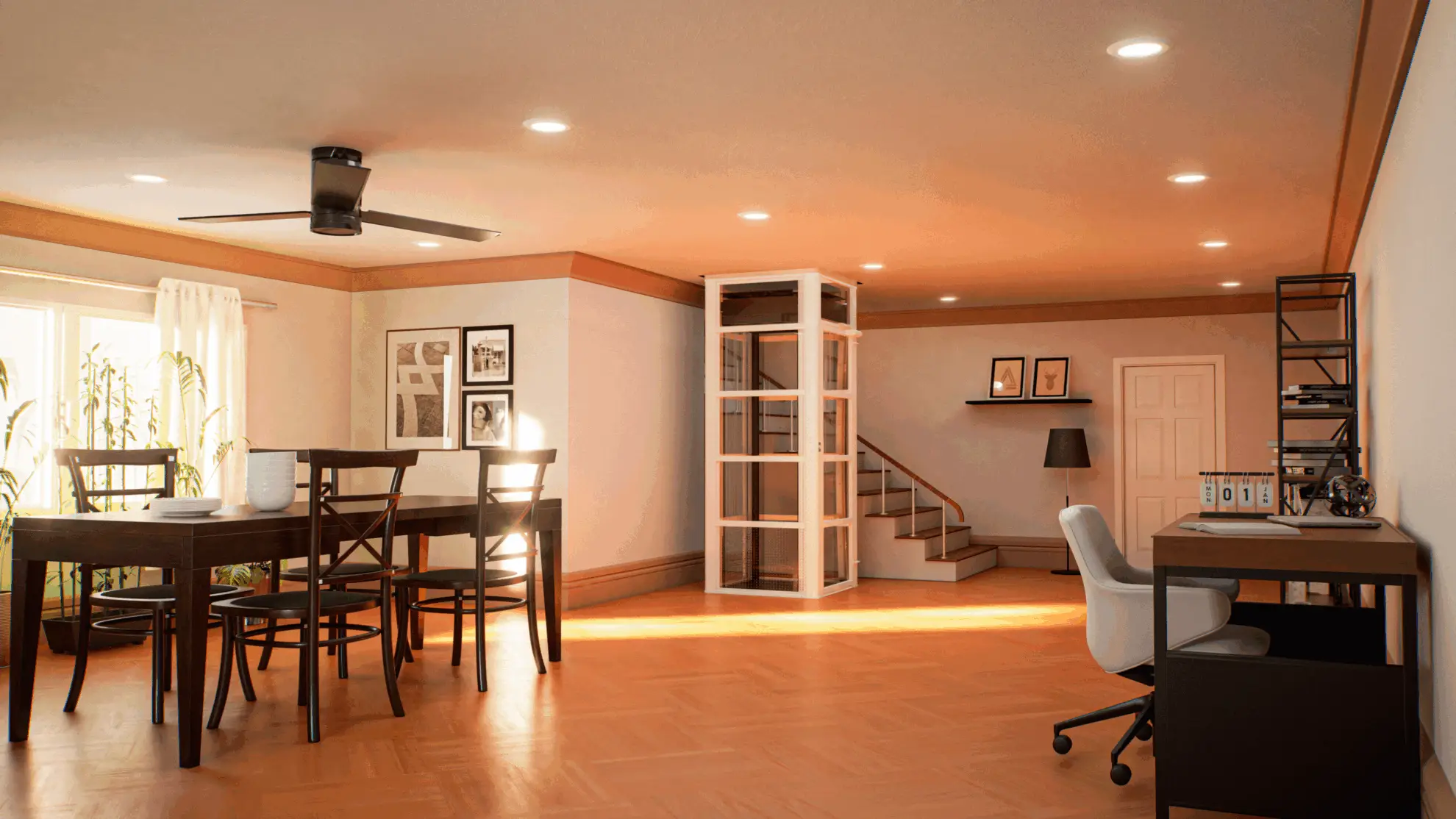
Why should a Nigerian homeowner plan for a residential elevator? The answer lies in preparing your multi-storey home for long-term comfort and accessibility. Consider Emeka, a homeowner in Lagos building a new duplex. He realized that while stairs work today, his ageing parents and growing children will need better mobility solutions tomorrow. By integrating a residential elevator Nigeria early in his building plan, he ensures his home remains comfortable for the next twenty years. This story explores how a residential elevator for long term home use in Nigeria transforms a standard house into a future-ready family sanctuary.
Why Did the Nigerian Homeowner Start Planning for the Future?
Emeka and his wife were designing a beautiful four-bedroom duplex. They wanted enough space for their children and a guest suite for visiting relatives. However, as the architectural drawings took shape, Emeka began thinking about the next two decades. His parents were in their late sixties, and his children were still young but would eventually grow up. He realized that relying solely on stairs might limit how his family uses the upper floors over time. He wanted a home that would adapt to his family through every life stage.
How Can a Home Support a Family as Its Members Grow Older?
A well-designed home should adapt to its residents. Long-term home accessibility means designing spaces that support independence and daily comfort. An elevator for elderly parents ensures they can access the master suite or the rooftop terrace without physical fatigue. It also helps significantly when carrying groceries, laundry, or heavy items between floors. Emeka wanted to create a living environment that supports his family effortlessly, regardless of their age or physical condition on any given day.
Why Should Homeowners Consider an Elevator Before They Need One?
Waiting until mobility becomes a daily struggle often leads to expensive and disruptive retrofits. During new construction or major renovations, integrating a home elevator for multi-storey buildings is much simpler and more cost-effective. Builders can reserve the right floor space, plan the floor openings, and route the electrical supply correctly from the start. Emeka decided to explore a pneumatic elevator Nigeria option because it requires minimal structural alteration compared to traditional systems.
What Is a Pneumatic Residential Elevator?
A residential pneumatic elevator uses air pressure differences to move the cabin smoothly between floors. A vacuum pump creates a pressure difference above and below the cab, causing it to glide upward. When descending, gravity and a controlled air release lower the cabin gently. This innovative technology eliminates the need for a separate machine room, a deep foundation pit, or heavy counterweights.
Is a Pneumatic Elevator Suitable for Long-Term Home Use?
Yes, it is highly suitable. The self-supporting cylindrical structure of a residential pneumatic elevator makes it incredibly adaptable to various home layouts. Its panoramic appearance allows natural light to flow through the home, maintaining an open and airy feel. Because it uses a transparent shaft, it fits beautifully in modern Nigerian duplexes without making the central living space feel enclosed or dark.
Which Home Elevator Features Matter Most for Older Adults?
When selecting an accessible home elevator, safety and ease of use are the top priorities. Features like automatic cabin lighting, soft start and stop mechanisms, and emergency lowering systems are crucial for peace of mind. For wheelchair users, the entrance width and internal cabin space must accommodate the chair comfortably. Emeka knew his parents might need wheelchair access in the future, so he focused heavily on models that support this specific requirement without compromising on style.
Which Pneumatic Elevator Model Should the Homeowner Consider?
PE Lifts offers several models tailored to different spatial and capacity needs. Emeka compared the options to see what fit his duplex layout and family requirements.
- PVE 30: Ideal for single passengers. It has a very compact footprint, making it perfect for tight spaces where only one person needs to travel between floors.
- PVE 37: Offers more interior space, comfortably accommodating a passenger with a small bag, or two people standing closely together.
- PVE 52: Designed specifically with wheelchair accessibility in mind. It provides the necessary internal diameter and door width for a standard wheelchair to enter and turn around easily.
- The Cube: A unique square design that maximizes interior space within a compact exterior footprint, offering a highly modern aesthetic for contemporary homes.
Practical Comparison for Long-Term Planning
| Model | Passenger Capacity | Wheelchair Accessible | Ideal Use Case |
|---|---|---|---|
| PVE 30 | 1 Passenger | No | Compact spaces, single-user mobility |
| PVE 37 | 2 Passengers | No | Standard family use, carrying light items |
| PVE 52 | 2 Passengers | Yes | Wheelchair users, maximum accessibility |
| The Cube | 2 Passengers | No | Modern aesthetics, maximizing interior space |
How Much Maintenance Does a Residential Elevator Require?
Pneumatic elevator maintenance is generally straightforward and highly reliable. Because the system relies on air pressure rather than complex mechanical gears or heavy cables, there is significantly less physical wear and tear. Routine servicing involves checking the seals, verifying the vacuum pump performance, and ensuring the electrical connections are secure. Emeka learned that scheduling annual professional inspections keeps the system running safely and efficiently for decades.
What Should Nigerians Consider Before Investing in a Home Elevator?
Financial planning is essential for any major home upgrade. Homeowners must budget for the initial purchase, home elevator installation Nigeria costs, and ongoing maintenance. It is also vital to consult a professional specialist before making a final decision. A proper site survey ensures the chosen model fits the actual floor dimensions and meets the specific mobility needs of the family. Emeka scheduled a consultation with PE Lifts to verify his floor plan and electrical capacity before finalizing his building designs.
Frequently Asked Questions
1. What is the main benefit of a residential elevator for long term home use in Nigeria? The main benefit is future-proofing your home. It ensures that all family members, including ageing parents and growing children, can access every floor of a multi-storey building safely and comfortably for decades.
2. How does a pneumatic elevator move between floors? It uses a vacuum pump to create air pressure differences. Higher pressure below the cabin pushes it upward, while controlled air release allows gravity to lower it smoothly during descent.
3. Do I need a machine room for a pneumatic home elevator? No. One of the biggest advantages of a pneumatic system is that it is self-supporting and does not require a separate machine room, pit, or heavy counterweights.
4. Which model is best for wheelchair accessibility? The PVE 52 is specifically designed for wheelchair accessibility, offering the necessary internal diameter and door width to accommodate a standard wheelchair comfortably.
5. How often should I service my residential pneumatic elevator? It is recommended to have a qualified technician perform a professional inspection and routine maintenance at least once a year to ensure optimal safety and performance.
Conclusion
Emeka's journey shows that building a home is about much more than just present convenience. By choosing to install a residential elevator Nigeria early in his project, he secured his family's comfort and independence for the next twenty years. A well-planned elevator transforms a standard multi-storey house into a truly accessible, lifelong home. If you are planning a new build or renovation and want to explore future-ready mobility solutions, contact PE Lifts today. Our specialists can help you assess your space and select the perfect pneumatic elevator for your family's long-term needs.